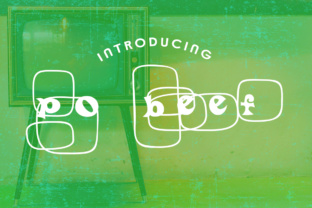
Po Beef: A Bold Choice for Retro Design Enthusiasts
If you're looking to add a unique, eye-catching element to your design projects, Po Beef might just be the font you need. This decorative typeface, created by Typodermic, brings a distinct 1950s aesthetic with its twisted, atomic-age flair. Whether you're working on a vintage poster, a retro logo, or a themed website, Po Beef can elevate your visual storytelling. However, like any design tool, it's important to understand how to use it effectively to avoid common pitfalls.
What Makes Po Beef Unique?
Po Beef is more than just a font—it's a statement. Its stylized, almost hand-drawn appearance gives it a playful yet sophisticated vibe that stands out in a sea of generic typefaces. The font's character shapes are exaggerated, with thick strokes and dramatic curves that evoke the spirit of mid-century design. This makes it ideal for projects that aim to capture nostalgia or create a sense of whimsy.
Designed for use in both print and digital media, Po Beef works well in headings, logos, and other prominent text elements. Its boldness ensures that it commands attention without overwhelming the overall composition. However, because of its ornamental nature, it's not always the best choice for body text or long paragraphs.
Common Mistakes When Using Po Beef
One of the most frequent mistakes when using Po Beef is overuse. While its striking design can add personality, using it too much can make a project look cluttered or unprofessional. For example, applying it to every heading and subheading in a document can dilute its impact and make the design feel chaotic.
Another common error is ignoring legibility. Po Beef's intricate details can sometimes make it difficult to read, especially at smaller sizes or in low-resolution formats. If you're using it for a website or app, ensure that it's paired with a more readable font for body text to maintain clarity and accessibility.
Choosing the Right Context
Before incorporating Po Beef into your design, consider the context. Is this a casual project, or does it require a more polished look? For instance, using Po Beef on a business card for a tech startup may not be the best idea if the brand's identity is more modern and minimal. On the other hand, it could be perfect for a vintage-themed event flyer or a retro-style restaurant menu.
Also, think about the audience. If your target demographic appreciates nostalgia or has a particular interest in 1950s design, Po Beef can resonate well. But if your audience prefers clean, straightforward typography, you might want to opt for something simpler.
Misunderstandings About Font Licensing
Many users overlook the licensing terms when downloading and using Po Beef. While it's a free font from Typodermic, there may be restrictions on commercial use, redistribution, or modification. Always check the license agreement to ensure that you're using the font within its permitted scope.
For example, if you're designing a logo for a client, you need to confirm whether the font can be embedded in a PDF or used in a vector graphic. Some licenses may require additional permissions for certain applications, so it's wise to review the details carefully before finalizing your project.
Testing Before Finalizing
Before committing to Po Beef, test it in different scenarios. Create a sample layout with your design elements and see how the font interacts with other components. Does it complement your color scheme? Does it work well with your background images or graphics?
Additionally, consider how it looks across various devices and screen sizes. A font that appears great on a desktop monitor may not render as clearly on a mobile device. Testing helps ensure that your design remains consistent and visually appealing regardless of where it's viewed.
Alternative Fonts and Comparisons
If Po Beef doesn't quite fit your needs, there are other fonts that offer similar retro styles. Fonts like Bebas Neue, ChunkFive, or Orbitron can provide a comparable aesthetic while offering better readability or versatility. However, each font has its own strengths and weaknesses, so it's important to evaluate them based on your specific project requirements.
For instance, if you're aiming for a more futuristic look, Orbitron might be a better fit. If you want something more streamlined but still nostalgic, ChunkFive could work well. Comparing these options allows you to make an informed decision rather than relying solely on one font's popularity.
Best Practices for Using Po Beef
To get the most out of Po Beef, follow these practical tips:
- Use it strategically. Apply it to headlines, titles, or key visual elements where it can shine without overshadowing the rest of the design.
- Pair it with complementary fonts. Combine it with a simple, sans-serif font for body text to maintain balance and readability.
- Test different sizes and weights. Adjust the font size and spacing to ensure it remains legible and visually harmonious with other design elements.
- Check licensing terms. Make sure you're using the font correctly, especially if it's for commercial purposes.
Final Thoughts
Po Beef is a powerful tool for adding a retro twist to your designs, but it requires thoughtful application. By understanding its strengths and limitations, you can avoid common mistakes and make the most of its unique style. Whether you're a designer, marketer, or hobbyist, taking the time to evaluate your font choices can lead to more effective and visually compelling results.
Remember, the goal is to enhance your message, not distract from it. With the right approach, Po Beef can become a standout element in your creative toolkit.